AstraZeneca logo
  • THERAPEUTIC AREAS
    • ONCOLOGY
    • R&I
    • CVRM
  • PRODUCTS
  • ABOUT US
  • FASENRA
    • Home
    • Efficacy Profile & Clinical Trials
    • About FASENRA®
    • Dosing & Administration
    • Resources
    • Safety Information
  • SYMBICORT
    • Home
    • Disease Burden
    • Efficacy Profile & Clinical Trials
    • Safety Profile
    • Mechanism of Action
    • Dosing & Administration
    • Resources
    • Safety Information
    • Product Monograph
    • Resources Patient
    • Resources HCP
    • home
    • Home Pharmacist
    • Home CRE RT
    • Safety Information 1
    • Home Physician
  • TEZSPIRE
    • Home
    • Efficacy Profile & Clinical Trials
    • Mechanism of Action
    • Dosing & Administration
    • Resources
    • Safety Information
    • NAVIGATOR study
    • PATHWAY study
    • Resources
  • TRUQAP
    • Home
    • Testing for Biomarkers
    • Efficacy Data & Pivotal Clinical Trial
    • Safety Profile
    • Mechanism of Action
    • Dosing & Administration
    • Resources & Ongoing Trials
    • Safety Information
    • Product Monograph
    • Efficacy data & Pivotal Clinical Trial
  • AZ Authentics
    • Home
    • What Is AstraZeneca Authentics?
    • How Does AstraZeneca Authentics Work?
    • Eligible AstraZeneca Brands
    • FAQ
  • test22
  • test33
  • Patient Profiles
Login/Register
  • TEZSPIRE
  • Efficacy Profile & Clinical Trials

Register now

To access the site, please provide the required information to verify that you are a Canadian healthcare professional and create an account. Once validated, this account can be used to log in to all myAstraZeneca websites for Canadian healthcare professionals. Please use the first and last name registered with your professional college.


Register

Already have an account?

If you already have an IQVIA OneKey account, log in to access the myAstraZeneca websites.

Login
EN FR

TEZSPIRE® (tezepelumab) Efficacy Profile & Clinical Trials

  • Clinical trials
  • —  NAVIGATOR study
  • —  PATHWAY study
  • Efficacy results
  • Study design and endpoints overview

TEZSPIRE® (tezepelumab)
efficacy profile and clinical trials

TEZSPIRE® was assessed in two 52-week randomized, double-blind, parallel-group, placebo-controlled, clinical trials enrolling patients ≥ 18 years of age (PATHWAY) and ≥ 12 years of age (NAVIGATOR).1-3

Back to Top

TEZSPIRE® (tezepelumab) clinical trials:
Efficacy results

In patients > 12 years old with severe asthma with both treatment arms as an add-on to background asthma therapy,*†

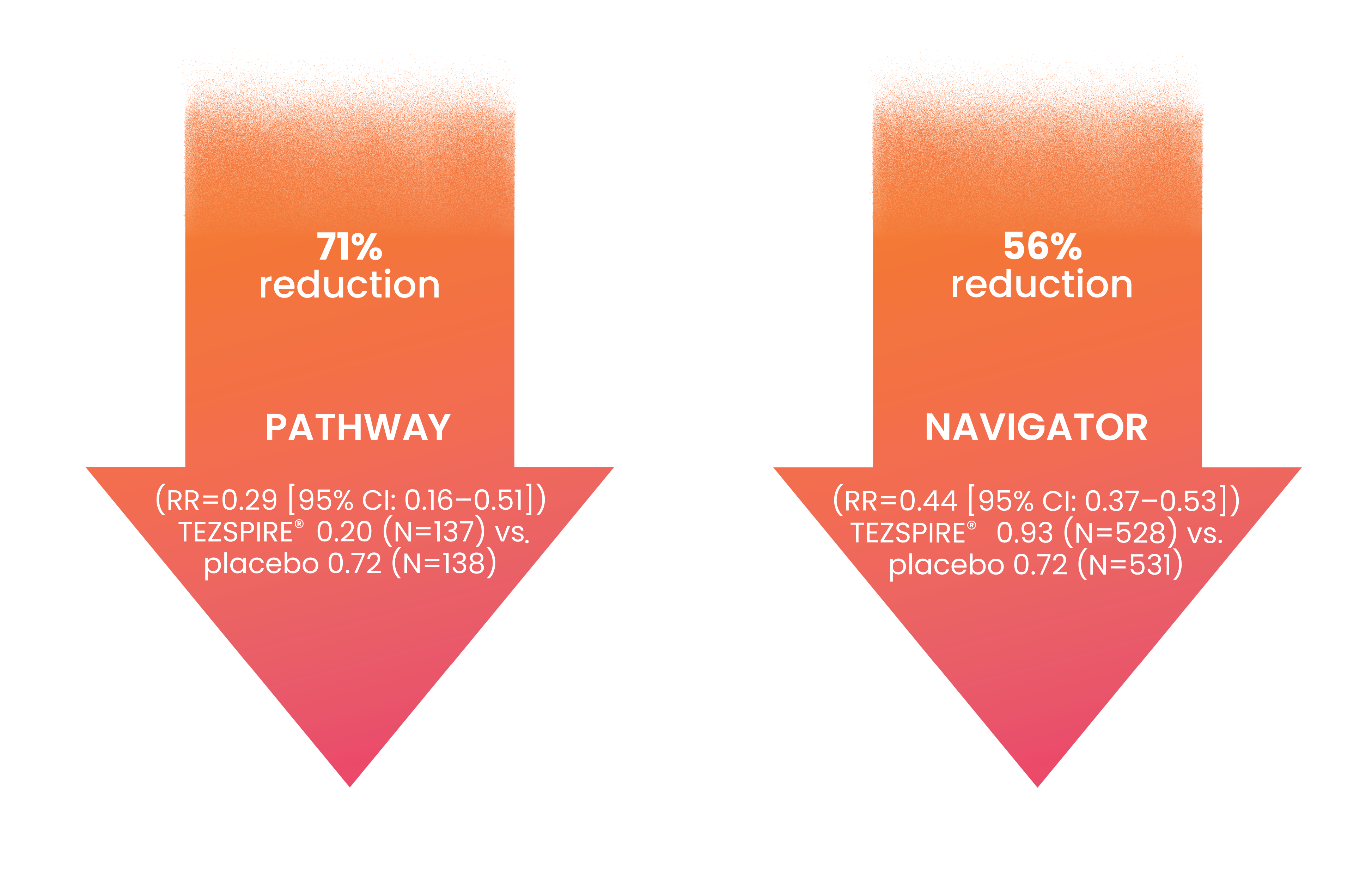
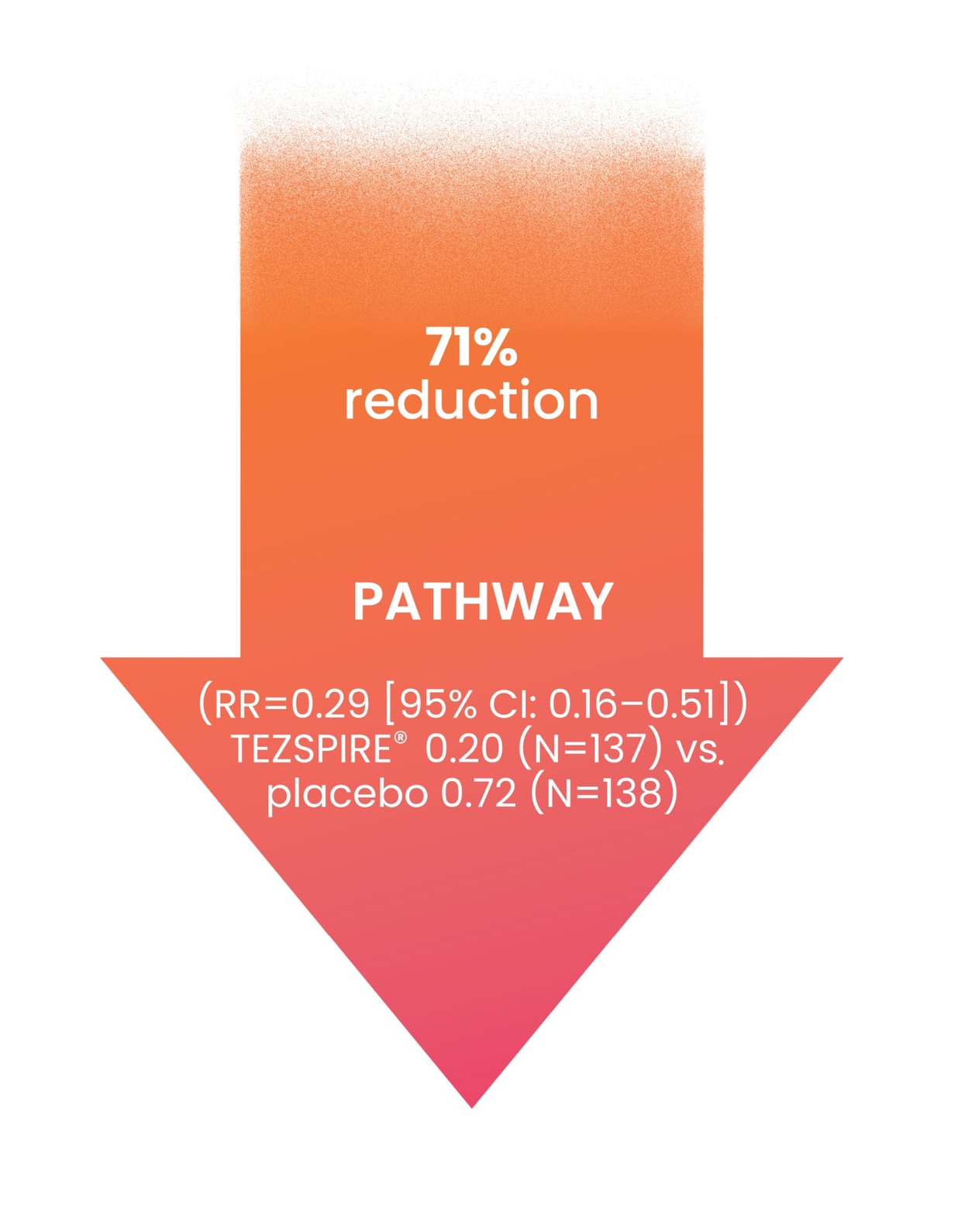
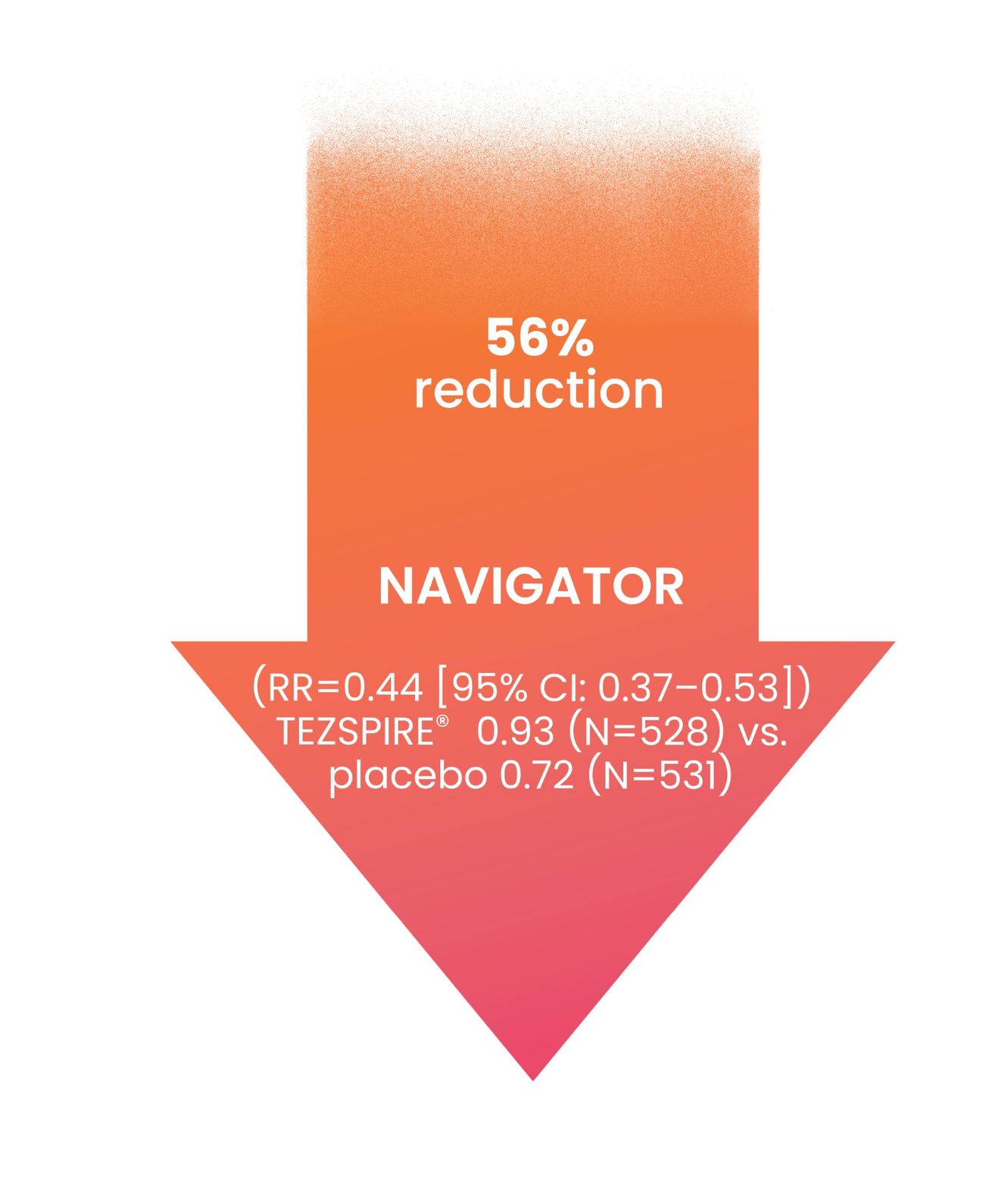
TEZSPIRE® demonstrated statistically significant and clinically meaningful reductions in the AAER vs. placebo in the overall population (primary endpoint)1‡§

TEZSPIRE® demonstrated statistically significant and clinically meaningful reductions in the AAER vs. placebo in the overall population (primary endpoint)1‡§ TEZSPIRE® demonstrated statistically significant and clinically meaningful reductions in the AAER vs. placebo in the overall population (primary endpoint)1‡§

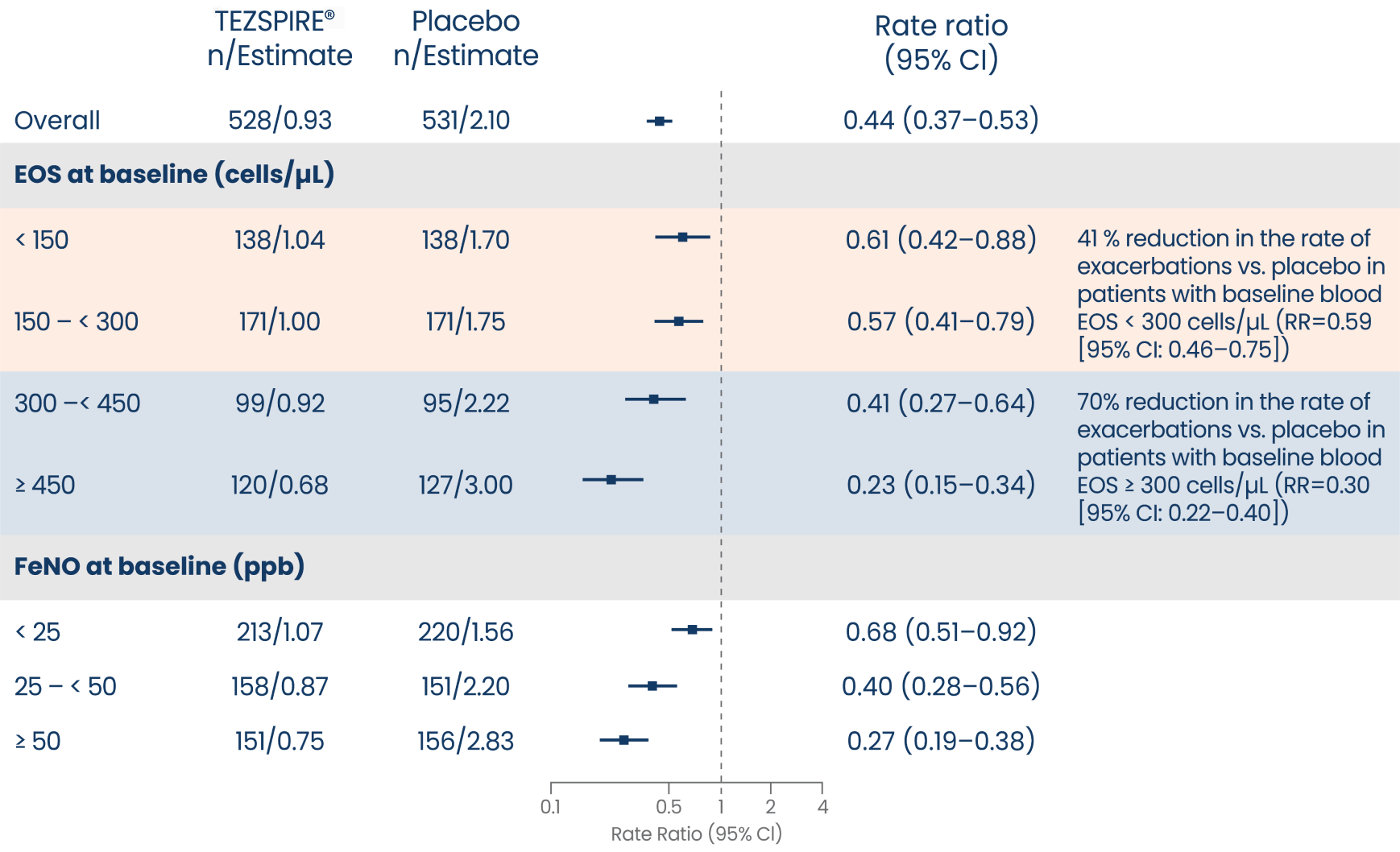
In an exploratory subgroup analysis, TEZSPIRE® demonstrated significant reductions in AAER across different baseline biomarkers (NAVIGATOR)1,4

AAER RATIO ACROSS BASELINE BLOOD EOS LEVELS AND FeNO

AAER ratio across baseline blood EOS levels and FeNO

Adapted from the Product Monograph.

Compared to placebo, TEZSPIRE®-treated patients experienced:

  • Fewer exacerbations regardless of baseline blood eosinophil or FeNO levels
  • Clinically meaningful reductions in exacerbation rate irrespective of allergic status, i.e., allergic/non-allergic, (categorical assessment)

Similar findings were observed in PATHWAY.

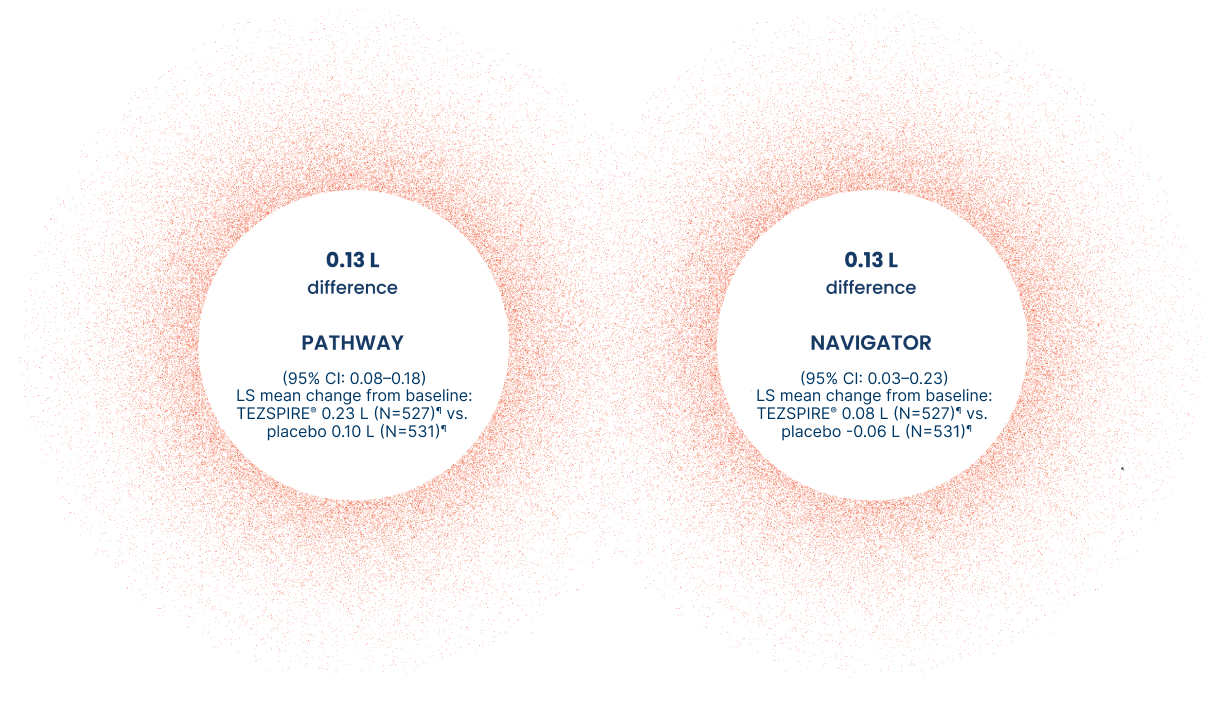
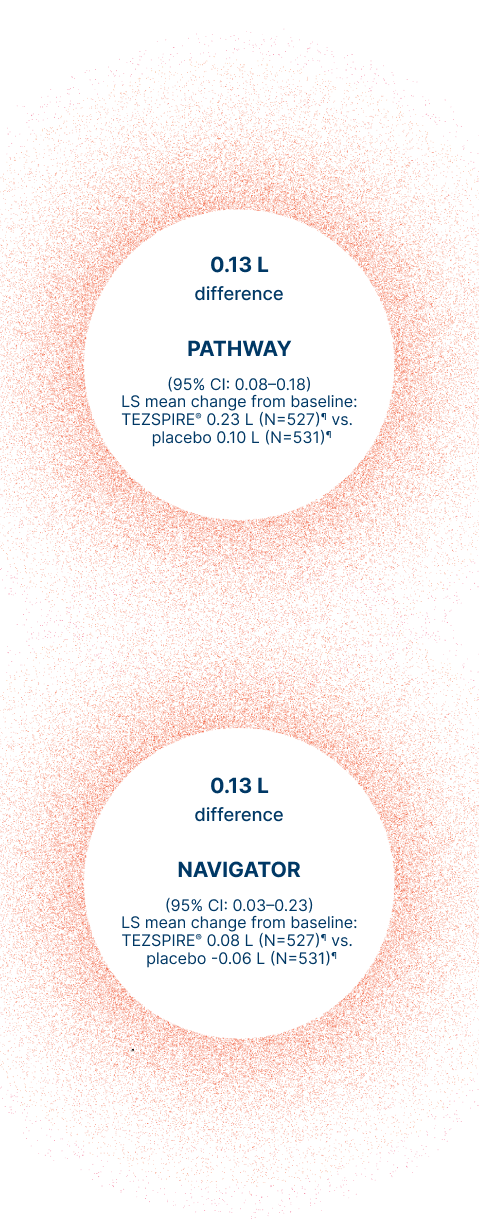
TEZSPIRE® provided clinically meaningful improvements in the mean change from baseline in FEV1 vs. placebo1

TEZSPIRE® provided clinically meaningful improvements in the mean change from baseline in FEV1 vs. placebo1 TEZSPIRE® provided clinically meaningful improvements in the mean change from baseline in FEV1 vs. placebo1

Adapted from the Product Monograph.

More TEZSPIRE® treated patients demonstrated clinically meaningful (responder rates) improvements in ACQ-6 and AQLQ(S)+12 vs. placebo (NAVIGATOR, PATHWAY)1

Clinically meaningful improvements were defined as an improvement in a score of 0.5 at the end of the trial.

ACQ-6

AQLQ(S)+12

86% of patients on TEZSPIRE® vs. 77% with placebo

78% of patients on TEZSPIRE® vs. 72% with placebo

Similar findings were reported for PATHWAY.

Back to Top

TEZSPIRE® (tezepelumab) clinical trials:
Study design and endpoints overview

The PATHWAY and NAVIGATOR trials enrolled a combined total of 1611 patients ≥ 12 years of age.

See below for additional inclusion criteria:

PATHWAY TRIAL

NAVIGATOR TRIAL

  • Regular treatment with medium- to high-dose ICS (medium ICS dose was defined as > 250 to 500 mcg fluticasone propionate or equivalent per day) and at least one additional asthma controller with or without OCS
  • ACQ-6 score ≥ 1.5 screening
  • Reduced lung function at baseline (pre-bronchodilator FEV1 < 80% predicted in adults, and < 90% predicted in adolescents)

≥ 2 ASTHMA EXACERBATIONS:

  • Requiring oral or systemic corticosteroid treatment or 1 asthma exacerbation resulting in hospitalization in the past 12 months
  • Regular treatment with medium- to high-dose ICS (medium ICS dose was defined as 500 mcg fluticasone propionate or equivalent per day) and at least one additional asthma controller with or without OCS
  • ACQ-6 score ≥ 1.5 at screening
  • Reduced lung function at baseline (pre-bronchodilator FEV1 < 80% predicted in adults, and < 90% predicted in adolescents)

≥ 2 ASTHMA EXACERBATIONS:

  • Requiring oral or systemic corticosteroid treatment or resulting in hospitalization in the past 12 months

In both trials, patients were not required to have a minimum baseline level of blood eosinophils or other inflammatory biomarkers (e.g., FeNO or IgE).

Note, patients continued background asthma therapy during the trials.

The rate of clinically significant asthma exacerbations measured over 52 weeks.#

The rate of clinically significant asthma exacerbations measured over 52 weeks.#

Change from baseline in:

  • Pre-dose pre-bronchodilator and post-bronchodilator FEV1
  • ACQ-6
  • AQLQ(S)+12

Change from baseline in:

  • Pre-dose pre-bronchodilator FEV1
  • ACQ-6
  • AQLQ(S)+12

Dig into the details of the pivotal NAVIGATOR and PATHWAY clinical trials.

NAVIGATOR study PATHWAY study
Back to Top

* Background asthma therapy included regular treatment with medium- or high-dose inhaled corticosteroids (ICS) and at least one additional asthma controller with or without OCS.

† Severe asthma was defined as a history of 2 or more asthma exacerbations requiring oral or systemic corticosteroid treatment or 1 asthma exacerbation resulting in hospitalization in the past 12 months (PATHWAY) or a history of 2 or more asthma exacerbations requiring oral or systemic corticosteroid treatment or resulting in hospitalization in the past 12 months (NAVIGATOR).

‡ The primary endpoint for PATHWAY and NAVIGATOR was the rate of clinically significant asthma exacerbations measured over 52 weeks. Clinically significant asthma exacerbations were defined as worsening of asthma requiring the use of or increase in oral or systemic corticosteroids for at least 3 days or a single depo-injection of corticosteroids, and/or emergency department visits requiring use of oral or systemic corticosteroids and/or hospitalization.

§ The annual asthma exacerbations and exacerbations requiring emergency room visit/hospitalization were analyzed through a negative binomial regression model, with the logarithm of time at risk included as an offset variable. In PATHWAY, treatment group, baseline blood eosinophil count (≥ or < 250 cells/uL), and baseline ICS dose level (medium or high) were included as covariates. Rates are the total number of asthma exacerbations in each group/total person-year follow-up in each group with exact Poisson confidence intervals. In NAVIGATOR, treatment, region, age group, and history of exacerbations were included as covariates and estimated marginal rates are presented from the model.

¶ Number of patients contributing to the full analysis with at least 1 change from the baseline value.

# Clinically significant asthma exacerbations were defined as worsening of asthma requiring the use of or increase in oral or systemic corticosteroids for at least 3 days or a single depo-injection of corticosteroids, and/or emergency department visits requiring use of oral or systemic corticosteroids and/or hospitalization.

AAER, annualized asthma exacerbations rate; ACQ-6, Asthma Control Questionnaire 6; AQLQ(S)+12; Standardised Asthma Quality of Life Questionnaire for ages 12 and older; CI, confidence interval; FeNO, fractional exhaled nitric oxide; FEV1, forced expiratory volume in one second; ICS, inhaled corticosteroid; IgE, immunoglobulin E; LS, least-square; OCS, oral corticosteroid; RR, rate ratio

References:

  1. AstraZeneca Canada Inc. TEZSPIRE® Product Monograph. 2024.
  2. Corren J, et al. Tezepelumab in Adults with Uncontrolled Asthma. N Engl J Med. 2017;377(10):936-946.
  3. Menzies-Gow A, et al. Tezepelumab in Adults and Adolescents with Severe, Uncontrolled Asthma. N Engl J Med. 2021;384(19):1800-1809.
  4. Health Canada. Regulatory Decision Summary - Tezspire - Health Canada. 2022. Available at: https://hpr-rps.hres.ca/reg-content/regulatory-decision-summary-detail.php?lang=en&linkID=RDS00977.

Last reviewed: Sept 2024

Amgen logoTezspire logo

TEZSPIRE® and the logo are trademarks of Amgen Inc. and the Amgen logo is a registered trademark of Amgen Inc., used under license by AstraZeneca Canada Inc.

CA-8885E. Last updated 10/24

AstraZeneca logo

© 2024 AstraZeneca Canada Inc. All rights reserved.

AstraZeneca and the AstraZeneca logo are registered trademarks of AstraZeneca AB, used under license by AstraZeneca Canada Inc.

CA-8890E

  • Legal Notice and Terms of Use
  • Privacy Policy
  • Cookie Policy
  • Contact Us
PAAB logoIMC logo

TEZSPIRE® and the logo are trademarks of Amgen Inc. and the Amgen logo is a registered trademark of Amgen Inc., used under license by AstraZeneca Canada Inc.

CA-8885E. Last updated 06/24

© 2024 AstraZeneca Canada Inc. All rights reserved.

AstraZeneca and the AstraZeneca logo are registered trademarks of AstraZeneca AB, used under license by AstraZeneca Canada Inc.

CA-8890E

  • Legal Notice and Terms of Use
  • Privacy Policy
  • Cookie Policy
  • Contact Us

Blueprint HCP Portal

La información contenida en este sitio web está dirigida exclusivamente a profesional sanitario facultado para prescribir o dispensar medicamentos en España (requiere una formación especializada para su correcta interpretación)AstraZeneca promueve la prescripción de sus productos farmacéuticos en las condiciones establecidas en su ficha técnica.

NO