Register now

To access the site, please provide the required information to verify that you are a Canadian healthcare professional and create an account. Once validated, this account can be used to log in to all myAstraZeneca websites for Canadian healthcare professionals. Please use the first and last name registered with your professional college.

Already have an account?

If you already have an IQVIA OneKey account, log in to access the myAstraZeneca websites.

FASENRA® is indicated as an add-on maintenance treatment of adult patients with severe eosinophilic asthma.

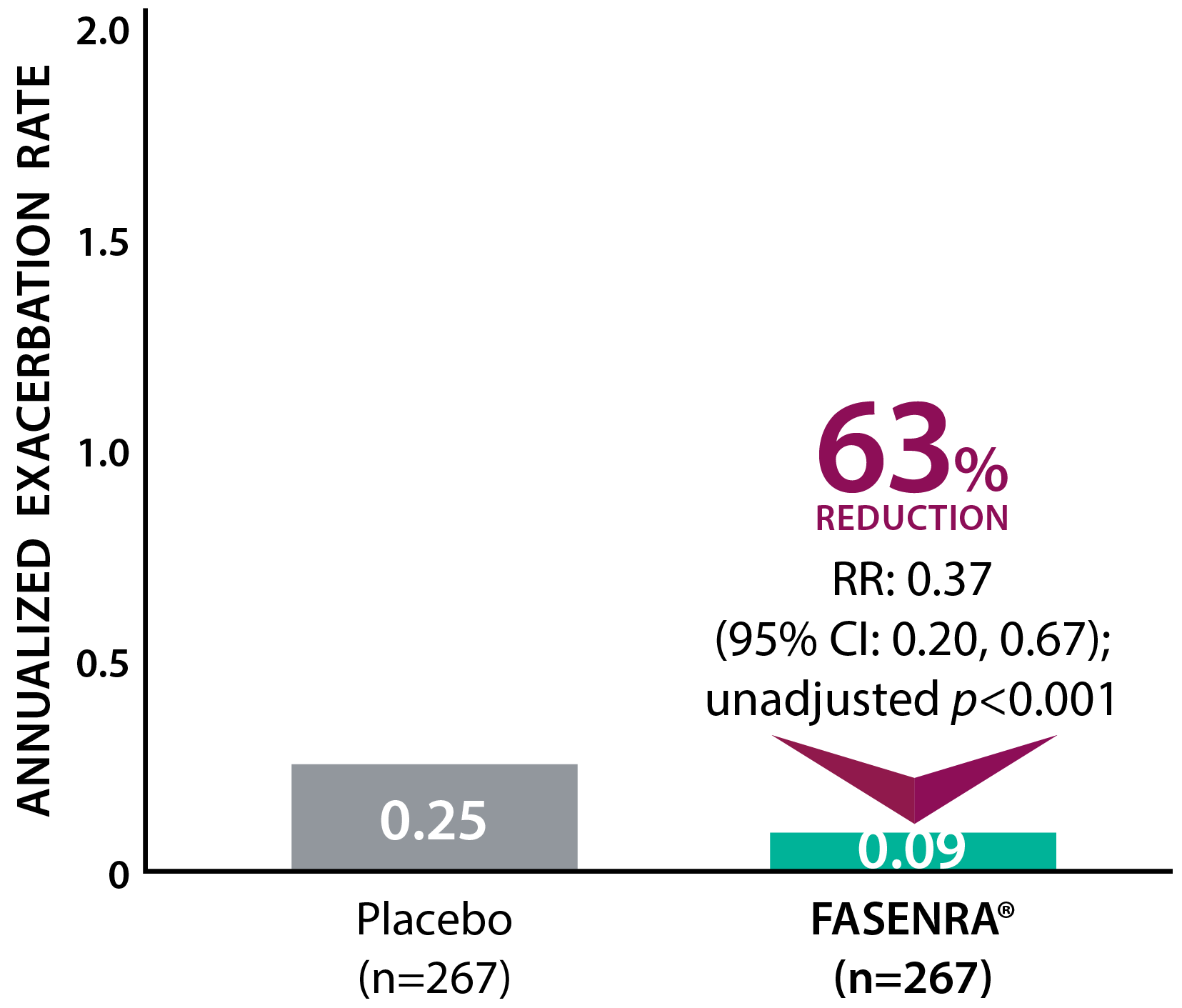
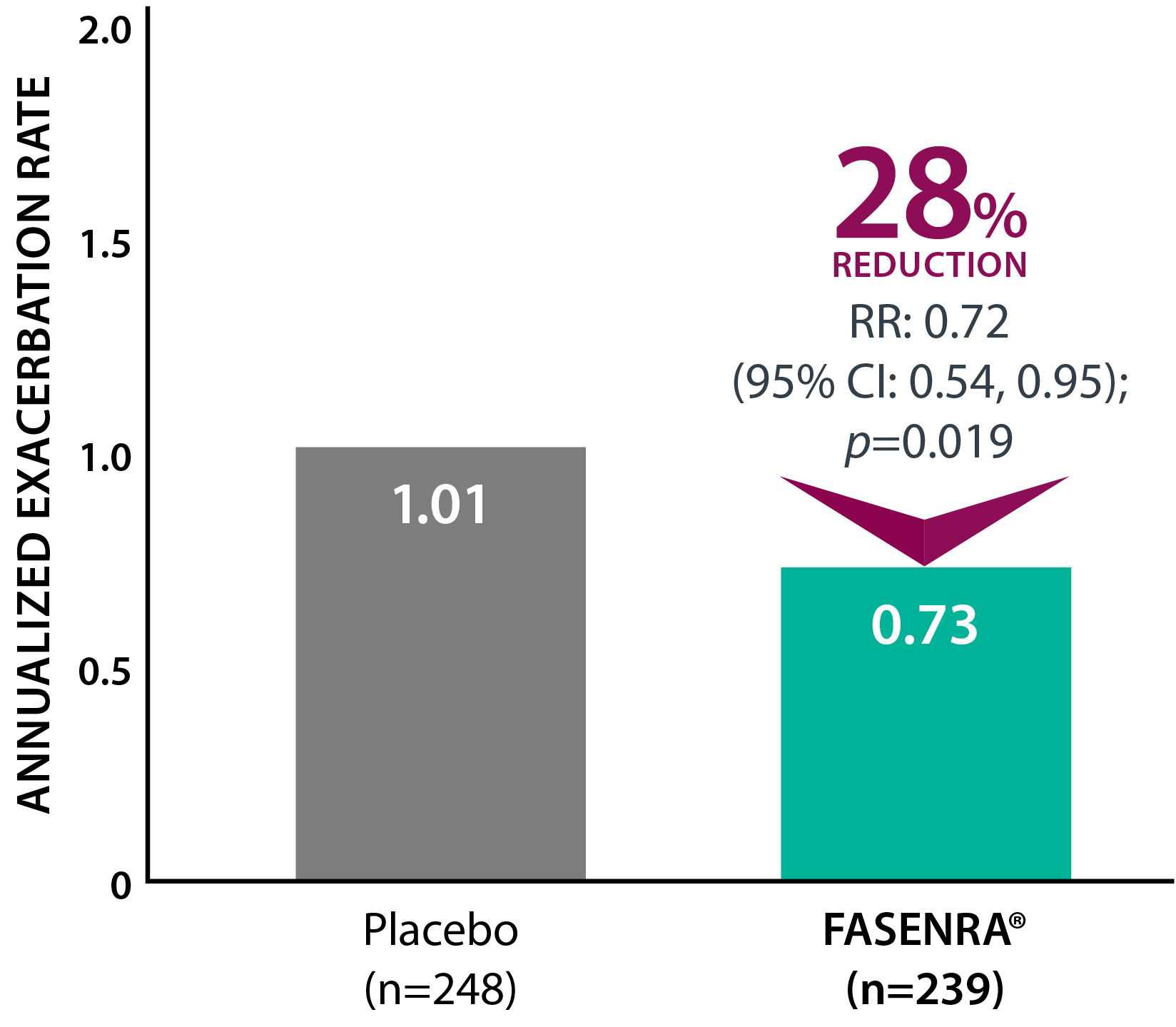
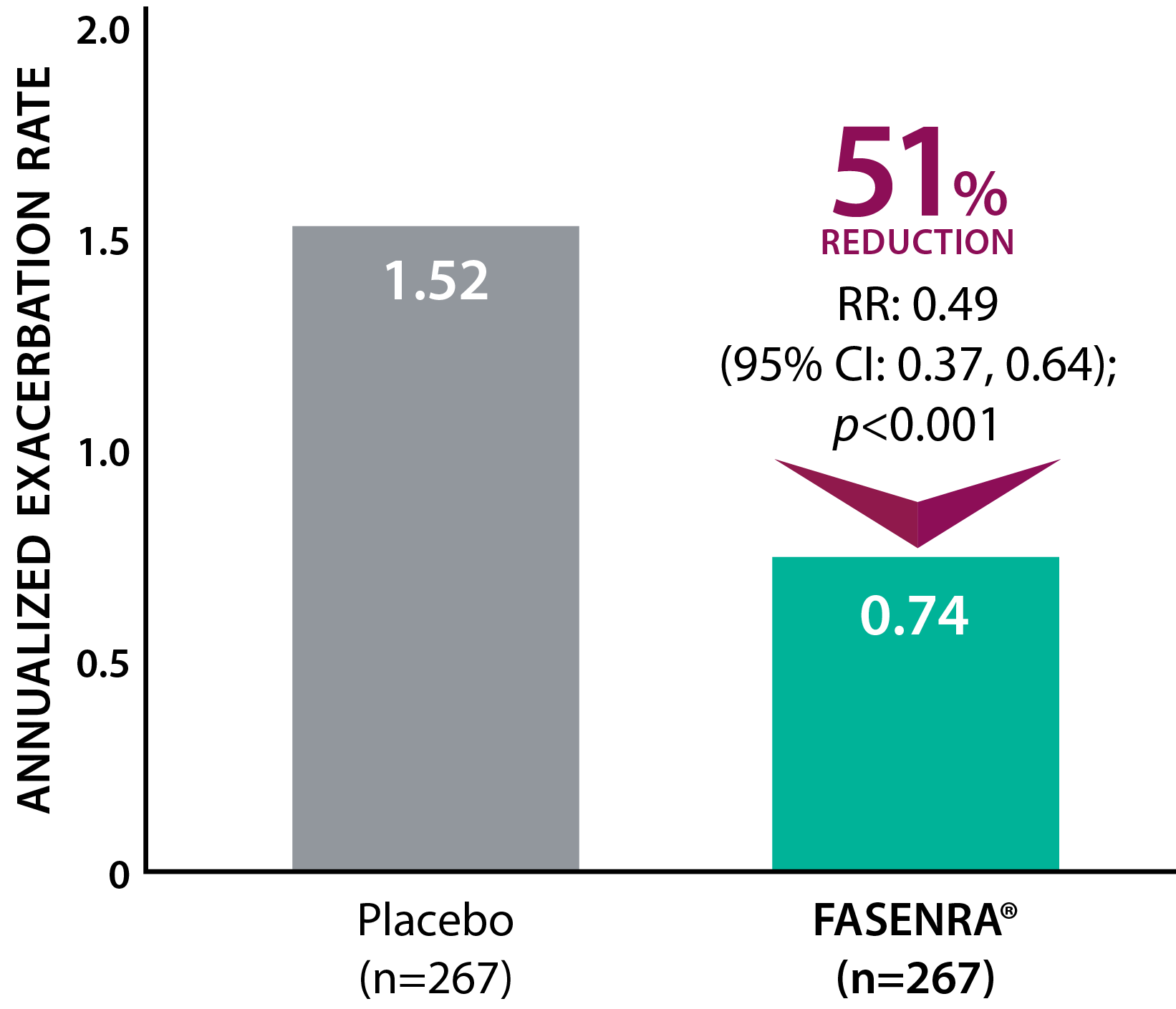
FASENRA® (benralizumab injection) provided significant reduction in the annual exacerbation rate vs. placebo

SIROCCO trial

In patients with blood eosinophil counts of ≥300 cells/µL taking high-dose ICS + LABA...1,2*

Rate of clinically significant exacerbations at week 48 (1° endpoint)

SIROCCO trial

Rate of exacerbations requiring hospitalization/ER visit at week 48 (2° endpoint)

SIROCCO trial

Adapted from FASENRA® Product Monograph.

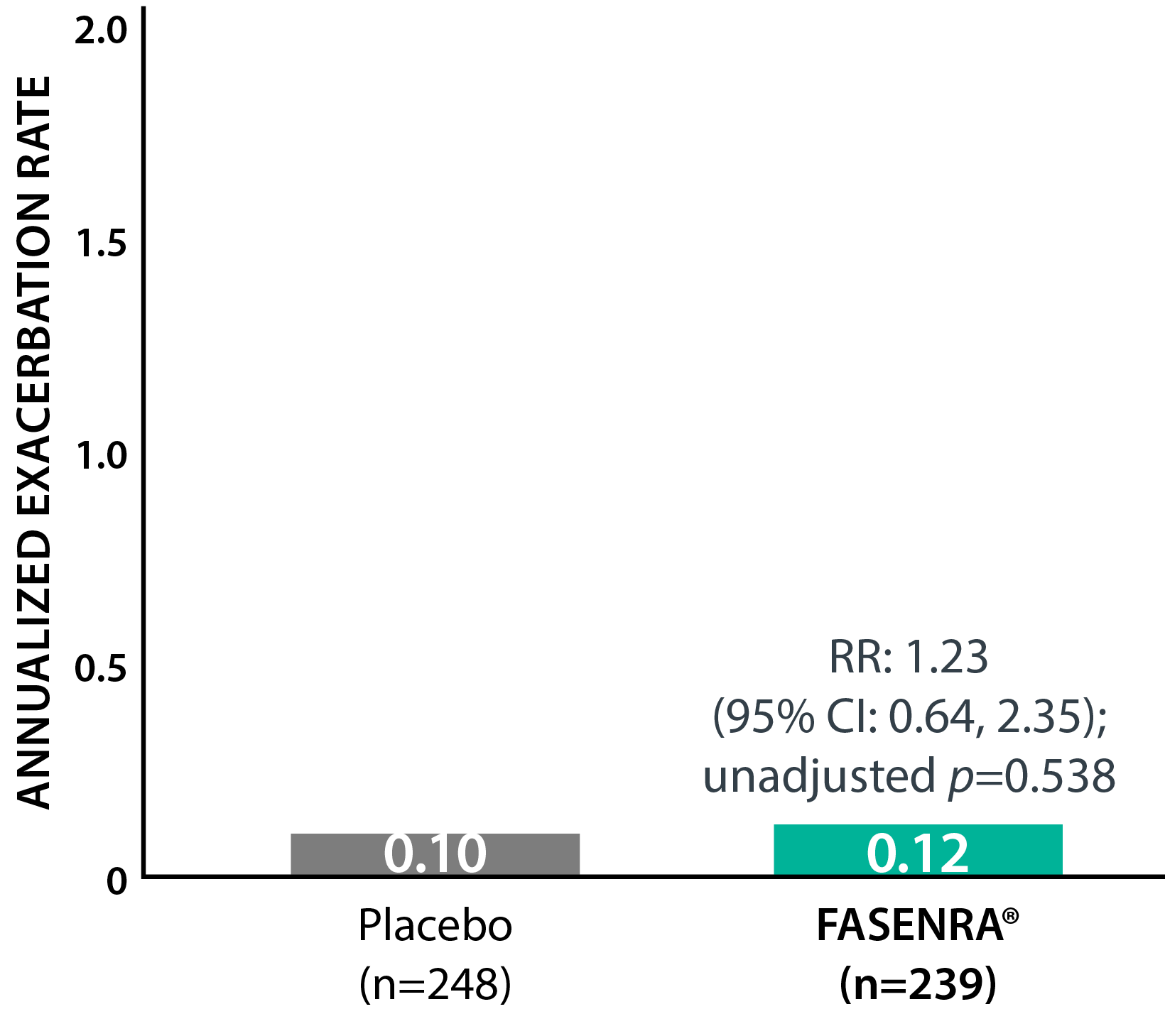
CALIMA trial

In patients with blood eosinophil counts of ≥300 cells/µL taking high-dose ICS + LABA...1†

Rate of clinically significant exacerbations at week 56 (1° endpoint)

CALIMA trial

Rate of exacerbations requiring hospitalization/ER visit at week 56 (2° endpoint)

CALIMA trial

Adapted from FASENRA® Product Monograph.

disclaimer_PAAB_icon

The data in this grey box is from an observational real-world programme composed of five studies conducted in Canada, UK, Italy, Portugal, and Spain. As a single-arm retrospective trial, the data should be interpreted cautiously, as it is not a randomized controlled trial or in the product monograph. The methodology may make it difficult to distinguish drug effects from the natural course of the disease or placebo effects.

Annualized exacerbation rates observed in the XALOC-1 study3‡

At week 48:

  • Annualized exacerbation rate, mean (95% CI): 0.53 (0.46–0.60)
  • 71.3% patients had 0 exacerbation
  • 17.1% patients had 1 exacerbation
  • 6.9% patients had 2 exacerbations
  • 3.2% patients had 3 exacerbations
  • 1.5% patients had ≥4 exacerbations

This is a retrospective cohort study (N=1002). The results should be interpreted with caution, as they featured neither randomization nor blinding. Additionally, a measure of sample dispersion was unavailable. The study’s applicability to the Canadian healthcare system has not been fully established, as the data is sourced from retrospective observational data from five national studies: Canada (n=306), Italy (n=217), Portugal (n=74), Spain (n=204), and the UK (n=208).

Clinically significant exacerbation = Worsening of asthma leading to use of oral/systemic corticosteroids for ≥3 days, ER visit requiring oral/systemic corticosteroids, or hospitalization. For patients on maintenance OCS, a clinically significant exacerbation requiring OCS was defined as a temporary increase in stable oral/systemic corticosteroids for ≥3 days or a single depo-injectable dose.1

* SIROCCO: 48-week, phase 3, randomized, double-blind study in patients with severe, uncontrolled asthma taking high-dose ICS + LABA. The primary efficacy (ITT) population had blood eosinophil count ≥300 cells/µL.1

CALIMA: 56-week, phase 3, randomized, double-blind study in patients with severe, uncontrolled asthma taking medium- or high-dose ICS + LABA. The primary efficacy (ITT) population had blood eosinophil count ≥300 cells/µL and was taking high-dose ICS.1

A multinational, retrospective, observational study conducted to assess the real-world effectiveness of FASENRA®. 1002 patients with severe eosinophilic asthma were enrolled in the study and received a dose that is aligned to the Product Monograph. The study assessed annualized exacerbation rate, mOCS use, asthma symptom control, and lung function. Exacerbation was defined as worsening of asthma leading to one of the following: (1) use of systemic corticosteroid for ≥3 days or a temporary increase in a stable background dosage of OCS; (2) emergency department or urgent care visit (<24 hours) due to asthma that required systemic corticosteroid; or (3) inpatient admission to hospital (≥24 hours) due to asthma.

CI: confidence interval; ER: emergency room; ICS: inhaled corticosteroids; ITT: intent-to-treat; LABA: long-acting beta2-agonist; mOCS: maintenance oral corticosteroids; RR: rate ratio.

References:

  1. FASENRA® Product Monograph, AstraZeneca Canada Inc.
  2. Bleecker ER, FitzGerald JM, Chanez P, et al. Efficacy and safety of benralizumab for patients with severe asthma uncontrolled with high-dosage inhaled corticosteroids and long-acting 
β2-agonists (SIROCCO): a randomised, multicentre, placebo-controlled phase 3 trial. Lancet. 2016;388(10056):2115–2127 (incl. supplement).
  3. Jackson DJ, Pelaia G, Emmanuel B, et al. Benralizumab in severe eosinophilic asthma by previous biologic use and key clinical subgroups: real-world XALOC-1 programme. Eur Respir J. 2024;2301521.


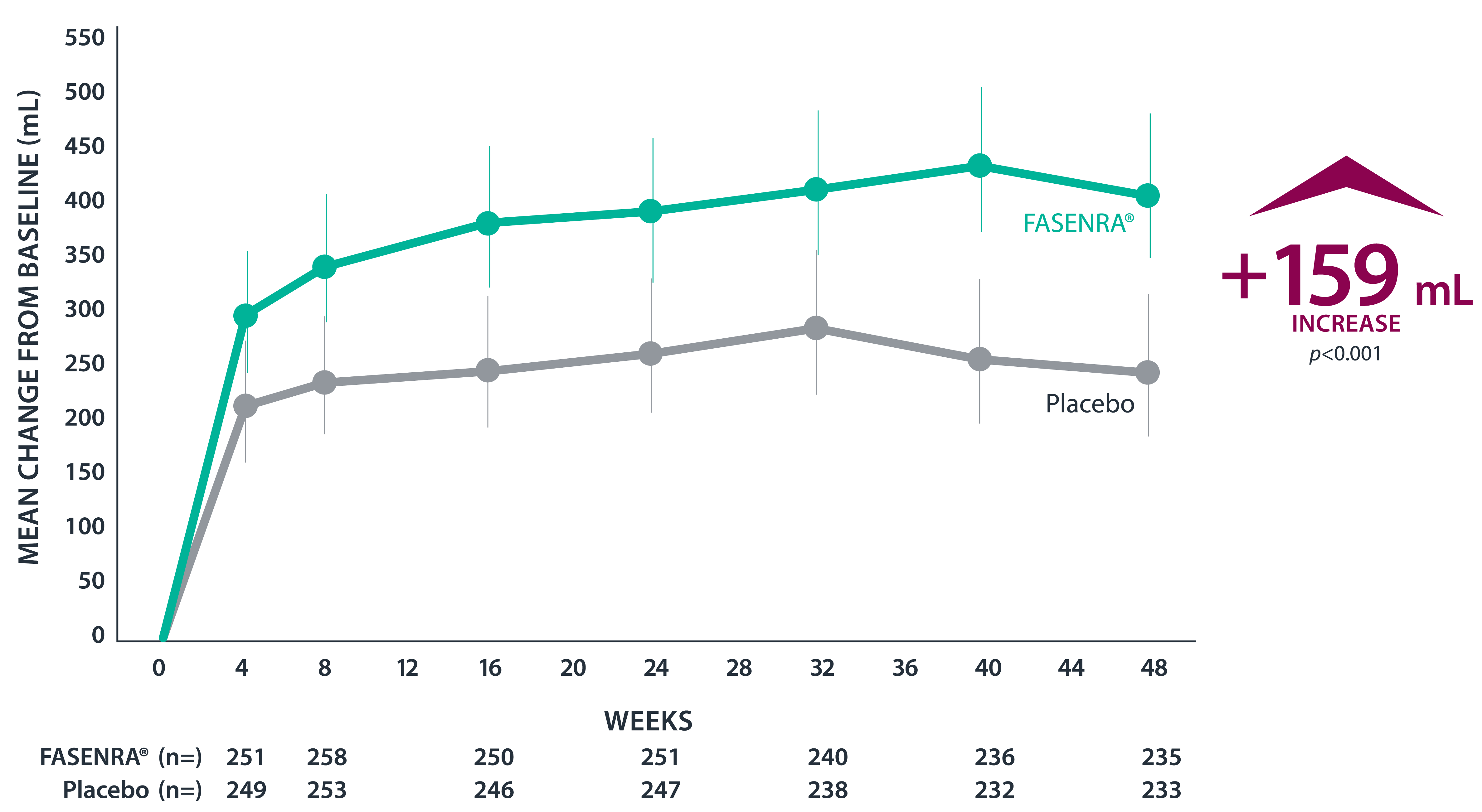
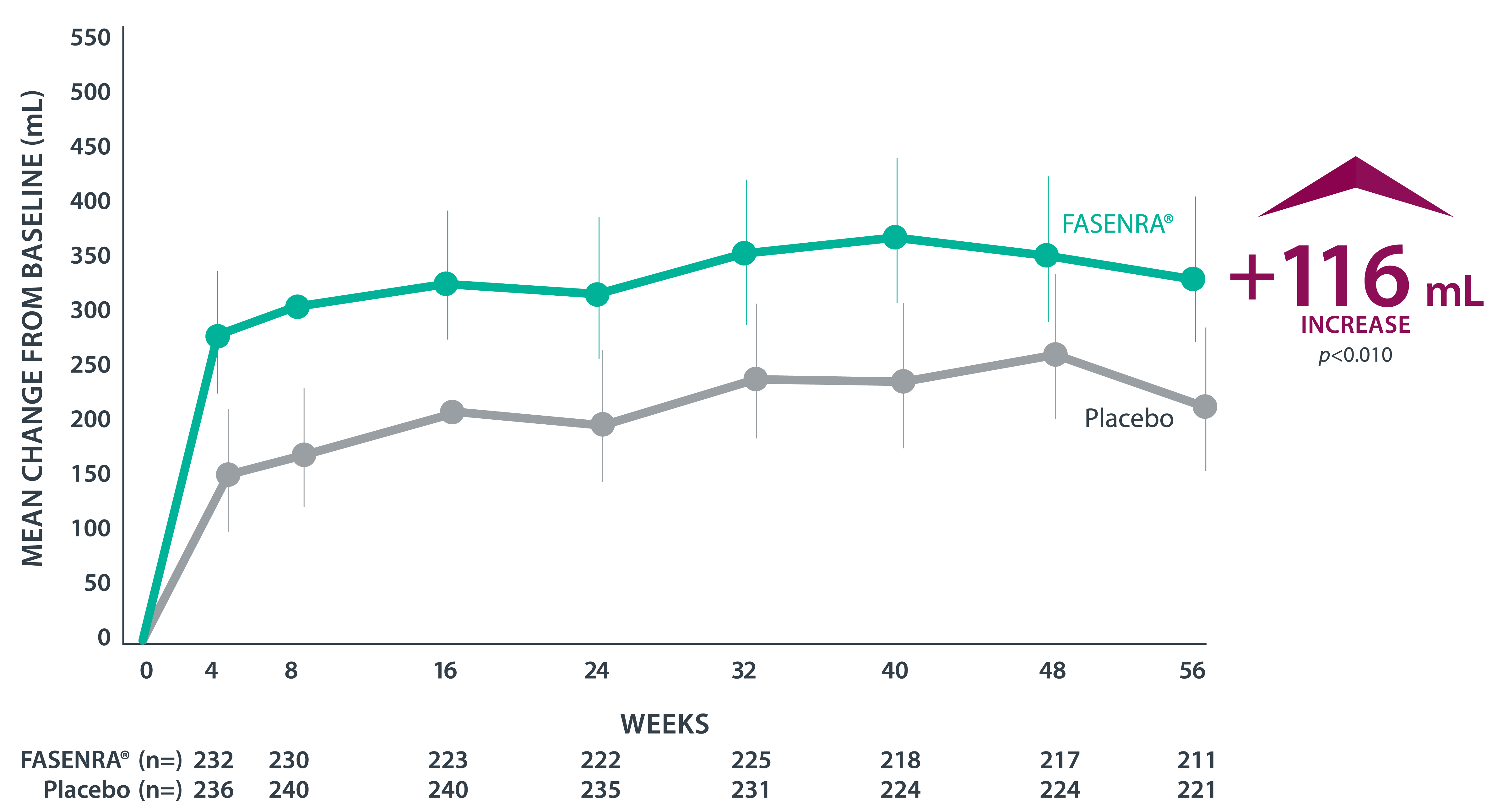
FASENRA® (benralizumab injection) provided significant improvements from baseline in lung function (FEV1) vs. placebo (2° endpoint)1*

SIROCCO trial

SIROCCO trial graph

Adapted from FASENRA® Product Monograph and Data on File.

CALIMA trial

CALIMA trial graph

Adapted from FASENRA® Product Monograph.

disclaimer_PAAB_icon

The data in this grey box is from an observational real-world programme composed of five studies conducted in Canada, UK, Italy, Portugal, and Spain. As a single-arm retrospective trial, the data should be interpreted cautiously, as it is not a randomized controlled trial or in the product monograph. The methodology may make it difficult to distinguish drug effects from the natural course of the disease or placebo effects.

Lung function observed in the XALOC-1 study2‡

  • Pre-bronchodilator FEV₁ at baseline (mean [SD]): 1.92 L (0.8)
  • At Week 48, LS mean change (95% CI) from baseline in pre-bronchodilator FEV₁: 0.27 L (0.20–0.34)
  • This is a retrospective cohort study (N=1002). The results should be interpreted with caution, as they featured neither randomization nor blinding. Additionally, a measure of sample dispersion was unavailable. The sample size assessed for the FEV1 endpoint was limited to 263 patients. The study’s applicability to the Canadian healthcare system has not been fully established, as the data is sourced from retrospective observational data from five national studies: Canada (n=306), Italy (n=217), Portugal (n=74), Spain (n=204), and the UK (n=208).

* SIROCCO: 48-week, phase 3, randomized, double-blind study in patients with severe, uncontrolled asthma taking high-dose ICS + LABA. The primary efficacy (ITT) population had blood eosinophil count ≥300 cells/µL.1

CALIMA: 56-week, phase 3, randomized, double-blind study in patients with severe, uncontrolled asthma taking medium- or high-dose ICS + LABA. The primary efficacy (ITT) population had blood eosinophil count ≥300 cells/µL and was taking high-dose ICS.1

A multinational, retrospective, observational study conducted to assess the real-world effectiveness of FASENRA®. 1002 patients with severe eosinophilic asthma were enrolled in the study and received a dose that is aligned to the Product Monograph. The study assessed annualized exacerbation rate, mOCS use, asthma symptom control, and lung function. Exacerbation was defined as worsening of asthma leading to one of the following: (1) use of systemic corticosteroid for ≥3 days or a temporary increase in a stable background dosage of OCS; (2) emergency department or urgent care visit (<24 hours) due to asthma that required systemic corticosteroid; or (3) inpatient admission to hospital (≥24 hours) due to asthma.

FEV1: forced expiratory volume in 1 second; ICS: inhaled corticosteroids; ITT: intent-to-treat; LABA: long-acting beta2-agonist; LS: least-squares; mOCS: maintenance oral corticosteroids; SD: standard deviation.

References:

  1. FASENRA® Product Monograph, AstraZeneca Canada Inc.
  2. Jackson DJ, Pelaia G, Emmanuel B, et al. Benralizumab in severe eosinophilic asthma by previous biologic use and key clinical subgroups: real-world XALOC-1 programme. Eur Respir J. 2024;2301521.
FASENRA® (benralizumab injection) has a proven safety profile 

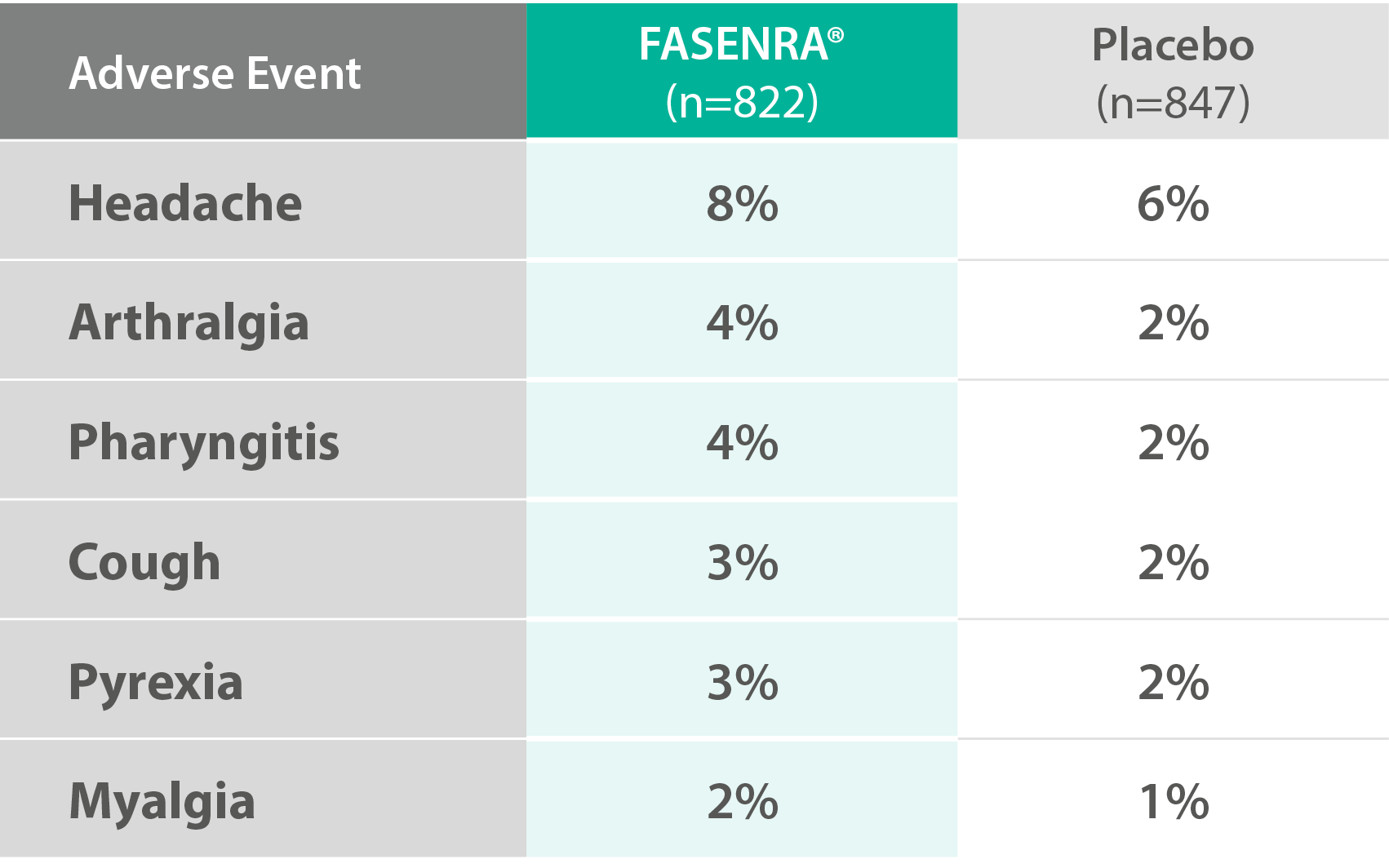
FASENRA® was generally well tolerated, with a low incidence of adverse events.1

Adverse events with ≥1% incidence with FASENRA® and ≥1% more common with FASENRA® than placebo

placebo-table placebo-table

Safety extension trials

In a select subset of patients who were tolerant to FASENRA® and entered the 56-week, single-blind, uncontrolled, extension trial (n=440), the safety profile of FASENRA® was consistent with that observed in placebo-controlled studies.1

Patients (n=226) transitioned to another extension study, MELTEMI, and were treated with FASENRA® every 8 weeks for up to 43 months.2

References:

  1. FASENRA® Product Monograph, AstraZeneca Canada Inc.
  2. Korn S, Bourdin A, Chupp G, et al. Integrated safety and efficacy among patients receiving benralizumab for up to 5 years. Allergy Clin Immunol Pract. 2021;9(12):4381–4392.