Register now

To access the site, please provide the required information to verify that you are a Canadian healthcare professional and create an account. Once validated, this account can be used to log in to all myAstraZeneca websites for Canadian healthcare professionals. Please use the first and last name registered with your professional college.


Already have an account?

If you already have an IQVIA OneKey account, log in to access the myAstraZeneca websites.

BREZTRI AEROSPHERE key clinical trials1-3

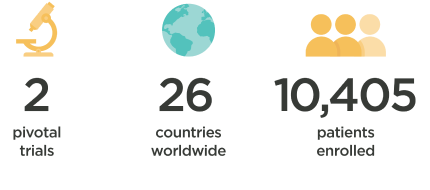
Microscope icon World icon People icon

Clinical efficacy and safety profiles for BREZTRI AEROSPHERE were established in two phase 3 trials.

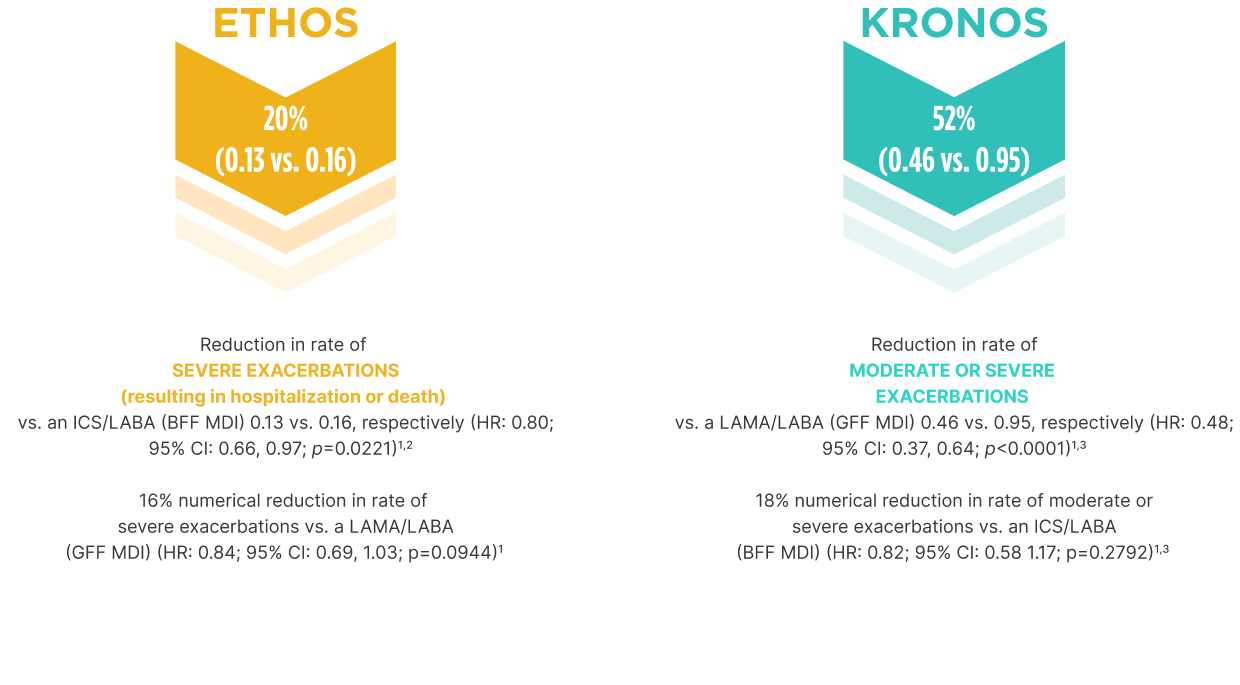
Choose powerful demonstrated efficacy against moderate to severe COPD exacerbations (including those resulting in hospitalizations or death)1

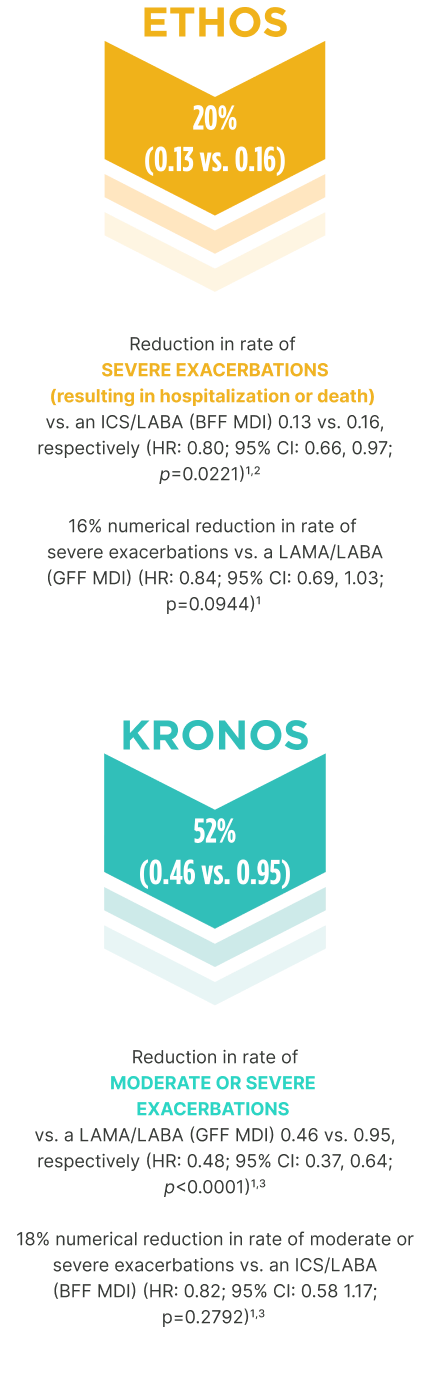
20% (0.13 vs. 0.16)
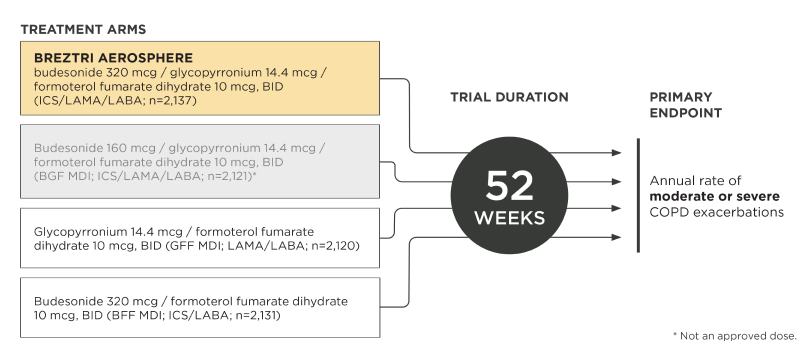
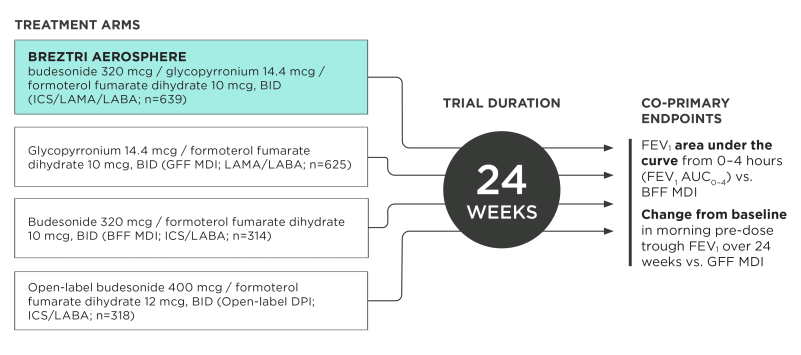
ETHOS clinical trial study design including treatment arms, trial duration, and primary endpoints.

ETHOS clinical trial

ETHOS study design1

Patient population

TOTAL N

8,509 patients
randomized

KEY INCLUSION CRITERIA

  • Moderate to very severe COPD
  • History of ≥1 exacerbation(s) in the previous 12 months
  • Baseline FEV1 ≥25% to <65% of predicted normal
  • Current or former smokers with ≥10 pack/year history of smoking
  • Symptomatic COPD while receiving ≥2 inhaled maintenance therapies for COPD at the time of screening

DEMOGRAPHICS

  • Mean age: 65 years 52% of patients aged 65 or over
  • Mean post-bronchodilator % predicted FEV1: 43% during screening
  • Patients on ICS-containing therapy pre-screening: 81%
  • Most common therapy at entry: ICS + LAMA + LABA, 39% ICS + LABA, 31% LAMA + LABA, 14%

Study design: A randomized, double-blind, multicentre, parallel-group study

ETHOS clinical trial study design including treatment arms, trial duration, and primary endpoints.

Selected secondary endpoints included:

  • Rate of severe COPD exacerbations
  • Time to first moderate or severe exacerbation
  • Rate of exacerbations in patients with ≥2 exacerbations in the previous year
  • Time to death (all cause)

* Not an available dose. Results are not presented.

† Exacerbations were defined as: worsening of 2 or more major symptoms (dyspnea, sputum volume, and sputum colour); or worsening of any 1 major symptom together with any 1 of the following minor symptoms: cough, wheeze, sore throat, colds (nasal discharge and/or nasal congestion), and fever without other cause for at least 2 consecutive days. Moderate exacerbation: treatment with systemic corticosteroids and/or antibiotics for 3 or more days required. Severe exacerbation: resulting in hospitalization or death.

ETHOS efficacy profile

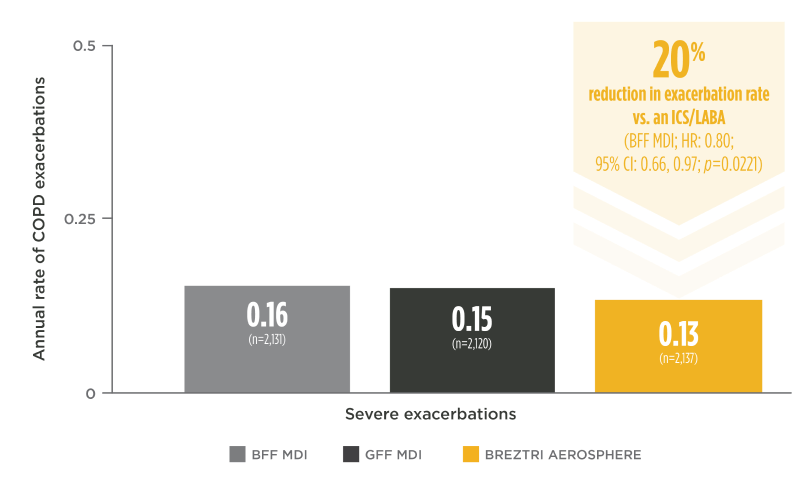
POWERFUL REDUCTION observed in severe exacerbations (resulting in hospitalization or death) vs. an ICS/LABA (BFF MDI)1,2

Annual rate of severe exacerbations

A Bar graph showing a 20% reduction in the annual rate of severe exacerbations demonstrated with BREZTRI AEROSPHERE vs. an ICS/LABA (BFF MDI) (0.13 vs. 0.16 respectively; HR: 0.80; 95% CI: 0.66, 0.97; p=0.0221).

Adapted from the BREZTRI AEROSPHERE Product Monograph.

Numerical reduction of 16% in exacerbation rate vs. a LAMA/LABA (GFF MDI; HR: 0.84; 95% CI: 0.69, 1.03; p=0.0944)

NNT=34Reduce 1 severe exacerbation for every 34 patients treated for 1 year with BREZTRI AEROSPHERE vs. an ICS/LABA (BFF MDI)

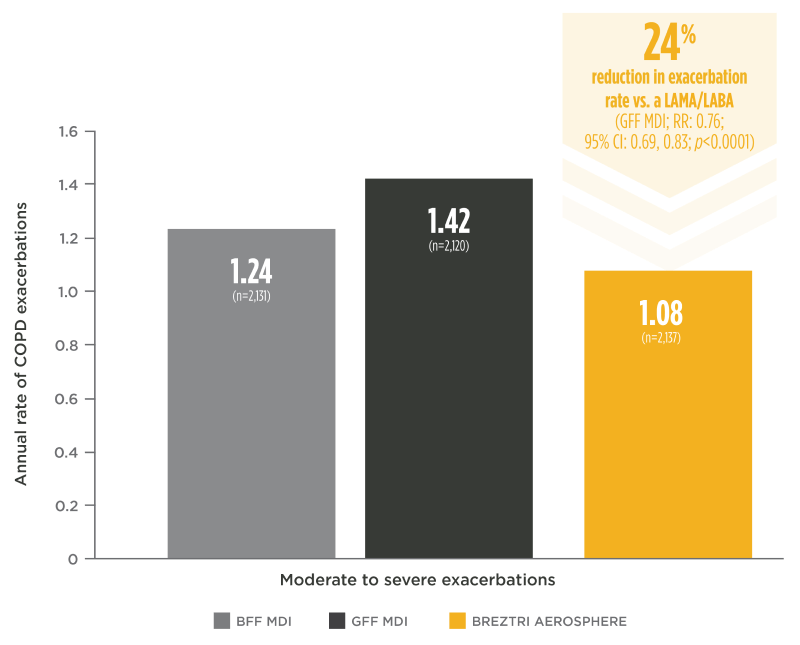
POWERFUL REDUCTION observed in moderate to severe exacerbations vs. a LAMA/LABA (GFF MDI) and an ICS/LABA (BFF MDI)1,2

Annual rate of moderate to severe exacerbations

Bar graph showing that there was a 24% reduction in the annual rate of moderate to severe exacerbations demonstrated with BREZTRI AEROSPHERE vs. a LAMA/LABA (GFF MDI) (1.08 vs. 1.42 respectively; RR: 0.76; 95% CI: 0.69, 0.83; p<0.0001).

Adapted from the BREZTRI AEROSPHERE Product Monograph.

Significant reduction of 13% in exacerbation rate vs. an ICS/LABA (BFF MDI; RR: 0.87; 95% CI: 0.79, 0.95; p=0.0027)

NNT=3Reduce 1 moderate to severe exacerbation for every 3 patients treated for 1 year with BREZTRI AEROSPHERE vs. a LAMA/LABA (GFF MDI)

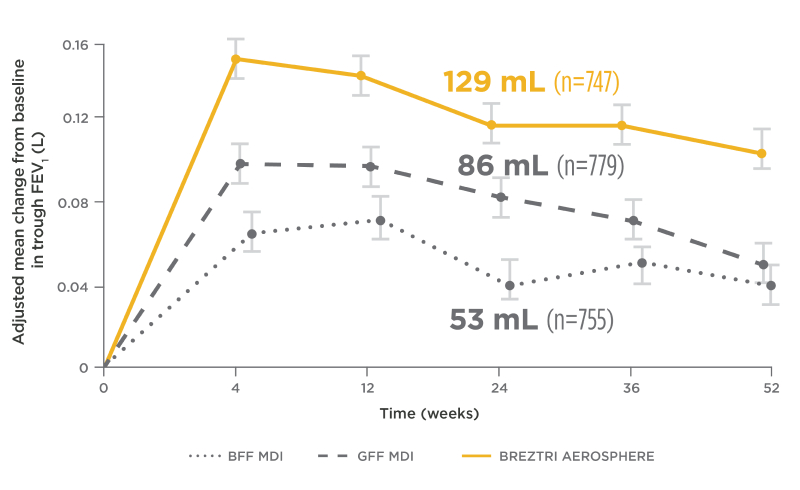
POWERFUL and SUSTAINED IMPROVEMENTS observed in lung function (FEV1) over 24 weeks vs. a LAMA/LABA (GFF MDI) and an ICS/LABA (BFF MDI)1,4

BREZTRI AEROSPHERE provided statistically significant improvements in trough FEV1 vs. a LAMA/LABA (GFF MDI) and an ICS/LABA (BFF MDI)

  • The improvements in lung function were sustained up to 52 weeks
Line graph showing that BREZTRI AEROSPHERE demonstrated a statistically significant improvement in trough FEV1 of 43 mL vs. a LAMA/LABA (GFF MDI) (53 mL vs. 86 mL respectively; 95% CI: 25, 60; p<0.0001) and a treatment difference of 76 mL vs. an ICS/LABA (BFF MDI) 53 mL vs. 129 mL respectively; 95% CI: 58, 94; p<0.0001).

Adapted from the BREZTRI AEROSPHERE Product Monograph and data on file.

* Statistically significant.

43 mL improvement vs. a LAMA/LABA (GFF MDI)(95% CI: 25, 60; p<0.0001)*

76 mL improvement vs. an ICS/LABA (BFF MDI) (95% CI: 58, 94; p<0.0001)

POWERFUL and SUSTAINED improvements observed in lung function (FEV1) over 24 weeks vs. a LAMA/LABA (GFF MDI) and an ICS/LABA (BFF MDI)1,4

BREZTRI AEROSPHERE provided statistically significant improvements in trough FEV1 vs. a LAMA/LABA (GFF MDI) and an ICS/LABA (BFF MDI)

  • The improvements in lung function were sustained up to 52 weeks

FEV1 AUC0-4 over 24 weeks, LS mean change from baseline (SE)

BREZTRI AEROSPHERE (n=747)

294 mL (6.3)

GFF MDI (n=779)

245 mL (6.3)

BFF MDI (n=755)

194 mL (6.3)

49 mL improvement vs. a LAMA/LABA (GFF MDI) (95% CI: 31, 66; p<0.0001)

99 mL improvement vs. an ICS/LABA (BFF MDI)(95% CI: 82, 117; p<0.0001)*

Adapted from the BREZTRI AEROSPHERE Product Monograph and data on file.

† Administered orally as two inhalations of BREZTRI AEROSPHERE 160/7.2/5 mcg, GFF MDI 7.2/5 mcg, BFF MDI 160/5 mcg, BID.

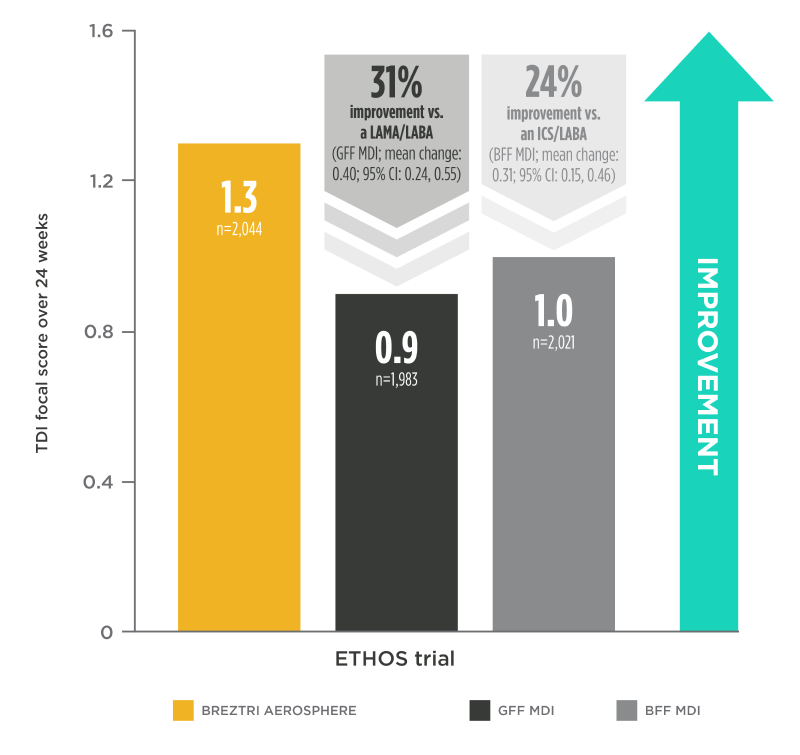
STATISTICALLY SIGNIFICANT IMPROVEMENTS IN BREATHLESSNESS (TDI focal score) were observed over 24 weeks vs. a LAMA/LABA (GFF MDI) and vs. an ICS/LABA (BFF MDI)1,3,5*

Bar graph showing that there was a 31% improvement demonstrated with BREZTRI AEROSPHERE vs. a LAMA/LABA (GFF MDI) (1.3 vs. 0.9 respectively; mean change: 0.40; 95% CI: 0.24, 0.55) and a 24% improvement demonstrated with BREZTRI AEROSPHERE vs. an ICS/LABA (BFF MDI) (1.3 vs. 1.0; mean change: 0.31; 95% CI: 0.15, 0.46).

Adapted from the BREZTRI AEROSPHERE Product Monograph.

* Breathlessness assessed by TDI focal score.

A ≥1‐unit change in the TDI focal score is clinically important6

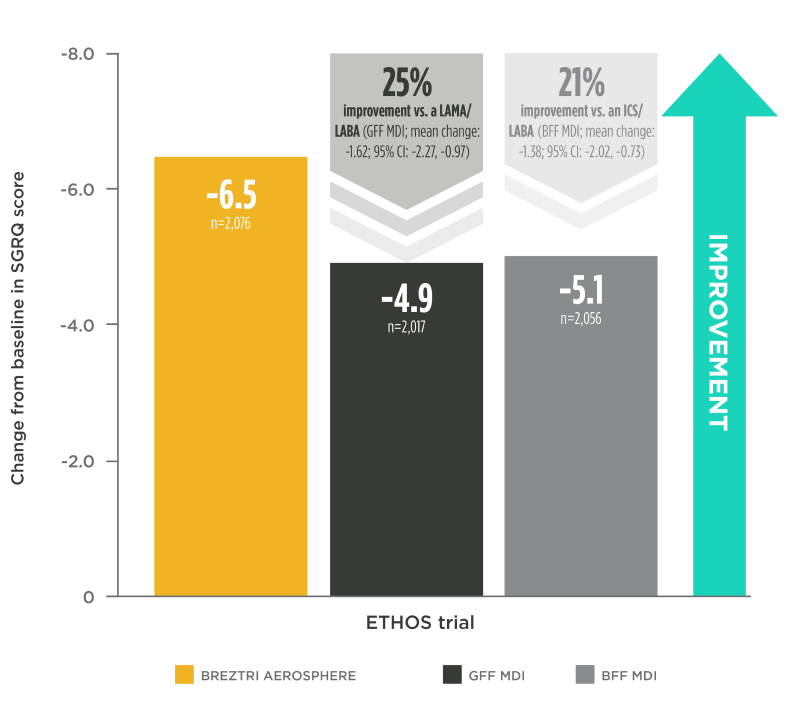
BREZTRI AEROSPHERE demonstrated POWERFUL IMPROVEMENTS in quality of life (SGRQ)1,5*

Statistically significant improvements in patient quality of life were observed over 24 weeks vs. a LAMA/LABA (GFF MDI) and vs. an ICS/LABA (BFF MDI) in the ETHOS trial.

Quality of life

Bar graph showing that there was a 25% improvement demonstrated with BREZTRI AEROSPHERE vs. a LAMA/LABA (GFF MDI) (-6.5 vs. -4.9 respectively; mean change -1.62; 95% CI: -2.27, -0.97) and a 21% improvement demonstrated with BREZTRI AEROSPHERE vs. an ICS/LABA (BFF MDI) (-6.5 vs. -5.1 respectively; mean change -1.38; 95% CI: -2.02, -0.73).

Adapted from the BREZTRI AEROSPHERE Product Monograph.

* Quality of life assessed by St. George’s Respiratory Questionnaire score.

† MCID: 4 units. Clinically important improvement defined as achieving an MCID decrease of ≥4 units.8

36% increase in likelihood of clinically important improvement in SGRQ for BREZTRI AEROSPHERE vs. a LAMA/LABA (GFF MDI) at week 24 (50.4% vs. 42.6% respectively; OR: 1.358; 95% CI: 1.199, 1.539; p<0.0001)7

A ≥4‐unit change in the SGRQ score is clinically important8

KRONOS clinical trial

KRONOS study design1

Patient population

TOTAL N

1,896 patients randomized

KEY INCLUSION CRITERIA

  • Moderate to very severe COPD
  • No prior history of ≥1 exacerbation(s) in the previous 12 months required
  • 74% of patients enrolled had no history of moderate/severe exacerbations in the prior year
  • Baseline FEV1 ≥25% to <80% of predicted normal
  • Current or former smokers with ≥10 pack/year history of smoking
  • Symptomatic COPD while receiving ≥2 inhaled maintenance therapies for COPD for ≥6 weeks prior to screening

DEMOGRAPHICS

  • Mean age: 65 years 55% of patients aged 65 or over
  • Mean post-bronchodilator % predicted FEV1: 50% during screening
  • Patients on ICS-containing therapy pre-screening: 72% of patients enrolled
  • Most common therapy at entry: ICS + LAMA + LABA, 27% ICS + LABA, 38% LAMA + LABA, 20%

Study design: A randomized, double-blind, multicentre, chronic-dosing, parallel-group study

KRONOS clinical trial study design including treatment arms, trial duration, and primary endpoints.

Selected secondary endpoints included:

  • Change from baseline in morning pre-dose trough FEV1 over 24 weeks vs.an ICS/LABA (BFF MDI)
  • Peak change from baseline in FEV1 within 4 hours post-dosing over 24 weeks
  • Rate of moderate or severe exacerbations*
  • Breathlessness (assessed by TDI focal score over 24 weeks)
  • Quality of life (assessed by change from baseline in SGRQ total score over 24 weeks)

* Exacerbations were defined as: worsening of 2 or more major symptoms (dyspnea, sputum volume, and sputum color); or worsening of any 1 major symptom together with any 1 of the following minor symptoms: cough, wheeze, sore throat, colds (nasal discharge and/or nasal congestion), and fever without other cause for at least 2 consecutive days. Moderate exacerbation: treatment with systemic corticosteroids and/or antibiotics for 3 or more days required. Severe exacerbation: resulting in hospitalization or death.

KRONOS efficacy profile

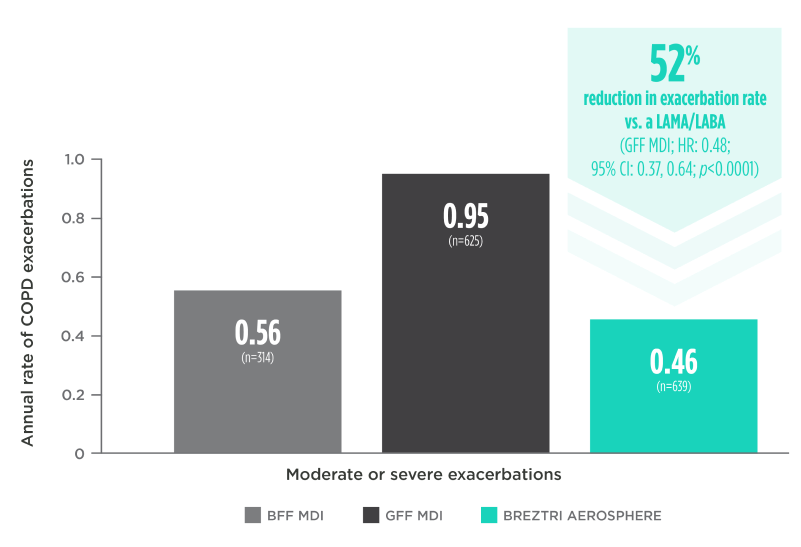
POWERFUL REDUCTION demonstrated in moderate and severe exacerbation rate vs. a LAMA/LABA (GFF MDI)1,3

Annual rate of moderate or severe exacerbations

Bar graph showing that there was a 52% reduction in the annual rate of moderate or severe exacerbations demonstrated with BREZTRI AEROSPHERE vs. a LAMA/LABA (GFF MDI) (0.46 vs. 0.95 respectively; HR: 0.48; 95% CI: 0.37, 0.64; p<0.0001).

Adapted from the BREZTRI AEROSPHERE Product Monograph.

Numerical reduction of 18% in exacerbation rate vs. an ICS/LABA (BFF MDI; HR: 0.82; 95% CI: 0.58 1.17; p=0.2792)

NNT=3Reduce 1 moderate/severe exacerbation for every 3 patients treated for 1 year with BREZTRI AEROSPHERE vs. a LAMA/LABA (GFF MDI)

KRONOS lung function analyses1

Trough FEV1 (mL) over 24 weeks, LS mean change from baseline (SE)

BREZTRI AEROSPHERE (n=639)*

147 mL (6.5)

GFF MDI (n=625)*

125 mL (6.6)

BFF MDI (n=314)*

73 mL (9.2)

22 mL improvement vs. a LAMA/LABA(GFF MDI) (95% CI: 4, 39; p=0.0139)

74 mL improvement vs. an ICS/LABA (BFF MDI) (95% CI: 52, 95; p<0.0001)

FEV1 AUC0-4 over 24 weeks, LS mean change from baseline (SE)

BREZTRI AEROSPHERE (n=639)*

305 mL (8.4)

GFF MDI (n=625)*

288 mL (8.5)

BFF MDI (n=314)*

201 mL (11.7)

16 mL treatment difference vs. a LAMA/LABA (GFF MDI) (95% CI: -6, 38; p=0.1448)

104 mL improvement vs. an ICS/LABA (BFF MDI) (95% CI: 77, 131; p<0.0001)

Lung icon

In KRONOS, BREZTRI AEROSPHERE provided statistically significant improvements in lung function over 24 weeks as measure by:

  • Trough FEV1 vs. a LAMA/LABA (GFF MDI) and an ICS/LABA (BFF MDI)
  • FEV1 AUC0-4 vs. an ICS/LABA (BFF MDI)

Adapted from the BREZTRI AEROSPHERE Product Monograph.

* Administered orally as two inhalations of BREZTRI AEROSPHERE 160/7.2/5 mcg, GFF MDI 7.2/5 mcg, BFF MDI 160/5 mcg, BID.

† Statistically significant.

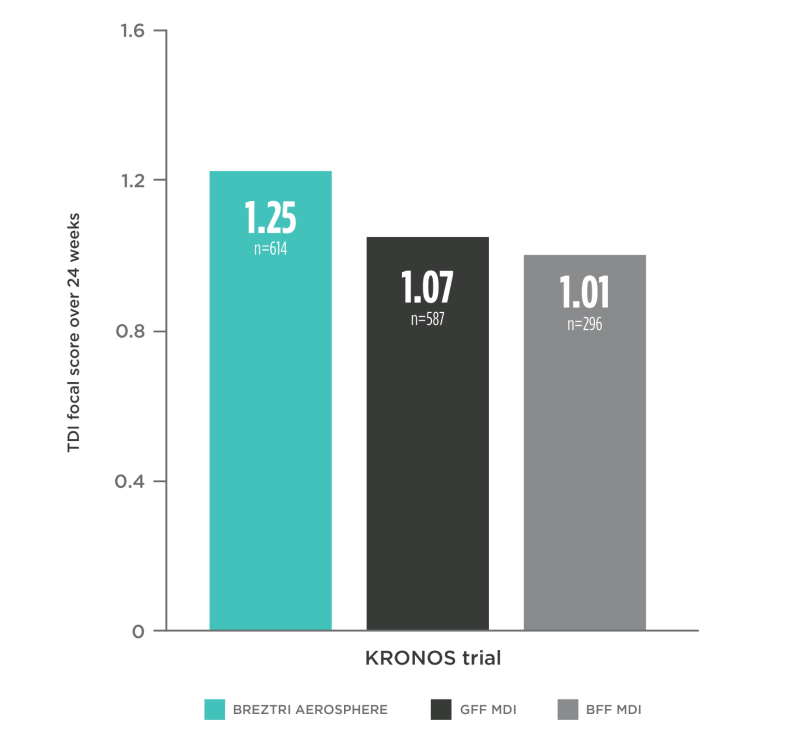
Numerical improvements in the TDI focal score were observed with BREZTRI AEROSPHERE vs. a LAMA/LABA (GFF MDI) and an ICS/LABA (BFF MDI) at week 241,3

Breathlessness

A bar graph showing the numerical improvements in the TDI focal score observed with BREZTRI aerosphere vs. a LAMA/LABA (GFF MDI) and an ICS/LABA (BFF MDI) at week 24 (1.25 vs. 1.07 vs. 1.01 respectively). The result for breathlessness did not differ significantly between treatment arms

Adapted from the BREZTRI AEROSPHERE Product Monograph.

A ≥1‐unit change in the TDI focal score is clinically important6

The result for breathlessness did not differ significantly between treatment arms.

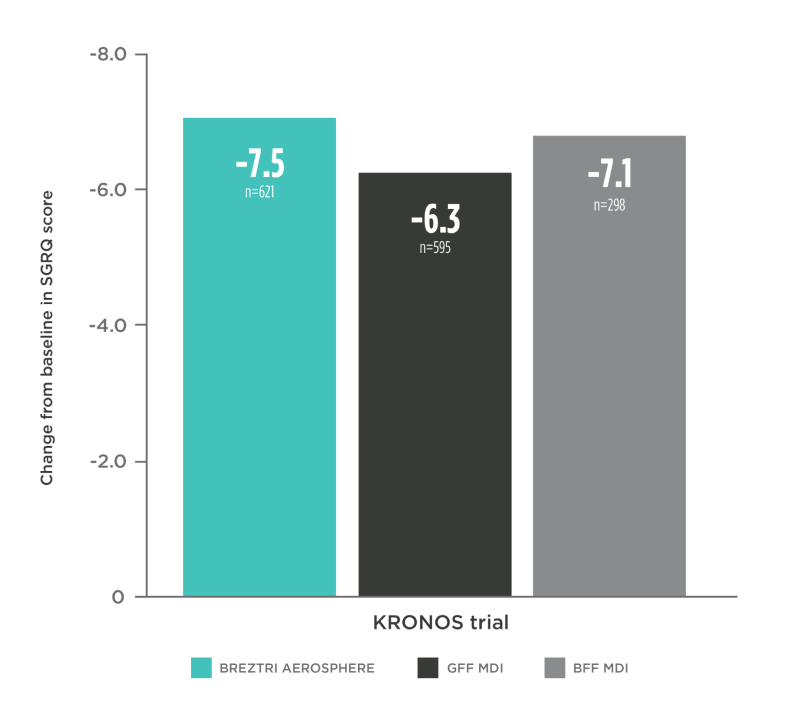
Numerical improvements in patient quality of life (SGRQ) were observed with BREZTRI AEROSPHERE vs. a LAMA/LABA (GFF MDI) and an ICS/LABA (BFF MDI) over 24 weeks.1,3

Quality of life

A bar graph showing the numerical improvements in the patient quality of life (SGRQ score) observed with BREZTRI aerosphere vs. a LAMA/LABA (GFF MDI) and an ICS/LABA (BFF MDI) over 24 weeks (-7.5 vs. -6.3 vs. -7.1 respectively). The result for SGRQ score did not differ significantly between treatment arms

Adapted from the BREZTRI AEROSPHERE Product Monograph.

A decrease in the SGRQ score represents improvement.A ≥4‐unit change in the SGRQ score is clinically important.8

The results for SGRQ score did not differ significantly between treatment arms.

AUC0-4: area under the curve from 0-4 hours; BID: twice daily; BFF: budesonide/formoterol fumarate dihydrate; BGF: budesonide/glycopyrronium/formoterol fumarate dihydrate; CI: confidence interval; COPD: chronic obstructive pulmonary disease; DPI: dry powder for inhalation; FEV1: forced expiratory volume in one second; HR: hazard ratio; GFF: glycopyrronium/formoterol fumarate dihydrate; ICS: inhaled corticosteroid; LABA: long-acting beta2-adrenergic agonist; LAMA: long-acting muscarinic antagonist; LS: least squares; MCID: minimal clinically important difference; MDI: metered-dose inhaler; NNT: number needed to treat; OR: odds ratio; RR: rate ratio; SE: standard error; SGRQ: St. George’s Respiratory Questionnaire; TDI: transition dyspnea index.

References:

  • BREZTRI AEROSPHERE Product Monograph. AstraZeneca Canada Inc.
  • Rabe KF, et al. Triple Inhaled Therapy at Two Glucocorticoid Doses in Moderate-to-Very-Severe COPD. NEJM. 2020;383(1):35-48.
  • Ferguson GT, et al. Triple therapy with budesonide/glycopyrrolate/formoterol fumarate with co-suspension delivery technology versus dual therapies in chronic obstructive pulmonary disease (KRONOS): a double-blind, parallel-group, multicentre, phase 3 randomised controlled trial. Lancet Respir Med. 2018(6):747-758.
  • AstraZeneca Canada Inc. Data on file – ETHOS trial Table 2.14.1. 2022.
  • Rabe KF, et al. Triple Inhaled Therapy at Two Glucocorticoid Doses in Moderate-to-Very-Severe COPD — Supplementary Appendix. NEJM. 2020;383(1):35-48.
  • Witek TJ, et al. Minimal important difference of the transition dyspnoea index in a multinational clinical trial. Eur Respir J. 2003(21):267-272.
  • Martinez FJ, et al. Benefits of budesonide/glycopyrrolate/formoterol fumarate (BGF) on symptoms and quality of life in patients with COPD in the ETHOS trial. Respir Med. 185(106509).
  • Chronic Obstructive Pulmonary Disease: Use of the St. George’s Respiratory Questionnaire as a PRO Assessment Tool. Food and Drug Administration. March, 2018. Available at: www.fda.gov/files/drugs/published/Chronic-Obstructive-Pulmonary-Disease--Use-of-the-St.-George%E2%80%99s-Respiratory-Questionnaire-as-a-PRO-Assessment-Tool-Guidance-for-Industry.pdf. Retrieved November 30, 2023.